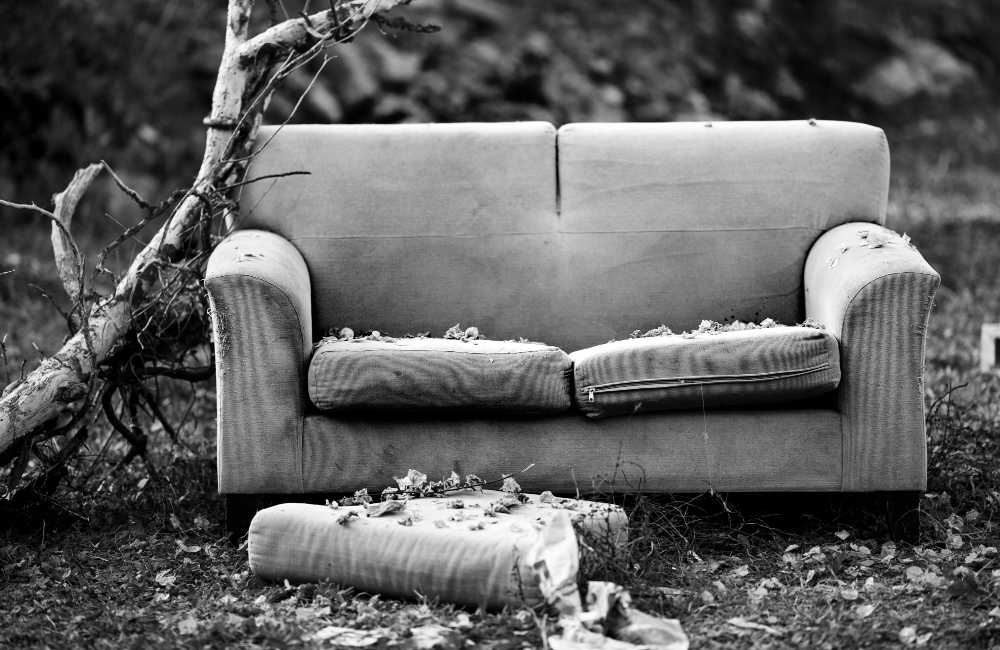
Do not dispose that furniture!
Before heading out to a big box store, consider redecorating by making repairs or reselling. Fixing things up or buying pre-loved furniture is an eco-friendly and money-saving decorating approach that brings character and creativity into every room of your home and workplace!
There are several reasons to repairing furniture:
🌱Environmental Impact
Furniture repair is an eco-friendly choice that helps reduce your carbon footprint. By fixing and restoring furniture, you contribute to the reduction of waste and the conservation of resources. Scientific data shows that restoring and refinishing furniture can drastically reduce your environmental impact. You’re not only extending the lifetime of your furniture, you are also increasing the lifespan of the planet. Apparently, it takes 1000 times more carbon dioxide to make a new mass-produced furniture compared with restoring an existing piece. Buying new mass manufactured furniture is only one half of the problem: junking your old wardrobe or coffee table creates its own environmental problems. Furniture factories use an enormous amount of energy and materials to produce products for global markets. Use of fossil fuels, problems surrounding deforestation and land degradation, and the climate cost of international and regional shipping are just some of the ways in which the phenomenon of ‘fast furniture’ harms our planet.
💰Cost Saving
Repairing furniture is often more cost-effective than buying new pieces. Replacing old furniture with new can be expensive, while repairing allows you to extend the life of your existing furniture and avoid the cost of purchasing new items. Old furniture doesn’t necessarily mean cheap furniture. Some antique items may hold some real value. Through the process of careful and skilled restoration, furniture can retain – and even increase - its value. Whether it’s carrying out a subtle structural repair or a sympathetic refinishing, the modest costs involved in restoration is far outweighed by the value this adds to your antique furniture. However, the success of this approach hangs on the quality of the restoration. If you have a genuine antique, make sure you employ the services of our experienced and suitably qualified restorers. Bad restoration can render a valuable piece worthless.
💖Preservation of Sentimental Value
Professional furniture repair can restore your furniture to its original condition, preserving its sentimental value. Whether it's a family heirloom or a piece with sentimental significance, repairing allows you to maintain the emotional connection and history associated with the furniture. If you’ve had a certain piece of furniture in your home for years, or even decades, the chances are you will have grown attached to it. An old dining table will have hosted many dinners and borne witness to the many ups and downs of family life. It will have acquired sentimental value. Watching a beloved piece of furniture slowly deteriorate can be difficult. But discarding it because of wear and tear is wasteful, expensive and unnecessary. Our skilled furniture restorer can bring it back to something approaching its former glory. In doing so, you keep hold of furniture you love, are able to enjoy it for years to come, and can pass it down to future generations. The older the piece of furniture, the greater the likelihood there will be less of them in existence. You may even have the last remaining coffee table or chair of its kind. But if you replace it with one purchased from a retail store, the same furniture will be in countless other homes up and down the country – and even across the world. Restoring your old furniture helps you retain something unique to you and potentially unique to the world. It brings a certain character and individuality to your home that simply can’t be achieved by buying new on the high street.
🩺Health Benefits
Furniture restoration can improve your health by eliminating potential hazards. Old furniture may have sharp edges, loose parts, or splinters that can cause injuries. Repairing and refinishing can address these issues, making the furniture safe to use. Aesthetics and style: Furniture restoration allows you to update the style of your furniture without the need to purchase entirely new pieces. By refinishing or restoring, you can give your furniture a fresh look, change the color or finish, and adapt it to your evolving taste and decor. A significant amount of mass-produced, low-cost furniture can create indoor air pollution. Soft furnishing can be particularly bad, releasing what is known as volatile organic compounds (VOCs) or semi volatile organic compounds (VOCs). In certain circumstances they can cause headaches and nausea. Furniture made predominantly from MDF can also produce harmful toxic fumes, with some reporting a concentration of formaldehyde over ten times air quality limits (Note 4). Older furniture, by contrast, typically contains more solid woods and high-quality veneers. This not only avoids exposure to toxins but provides significant health benefits.
⏳Extend the Life of the Piece
Through the process of restoration and repair, you extend the useful life of your furniture. Often built from quality hardwoods and veneers, in the hands of an experienced furniture restorer, old furniture can be revived in a way that modern furniture simply can’t. Most modern furniture is mass-produced using cheap materials such as MDF, chipboard and plastic laminates. Once damaged these materials can be very difficult, if not impossible, to repair. In fact, the low purchase price compared with the cost of repair often encourages people to dispose of the item and replace with new. In comparison, the materials and construction techniques common to older furniture makes a successful repair or refinish much easier to achieve. This means that a well-restored 40-year-old dining table can easily last another four decades.